The FIFA World Cup 2026 is the first edition with 48 teams, 104 matches, and three host countries: Canada, Mexico, and the United States. The tournament runs from June 11 to July 19, 2026, across 16 h...

Football 2026 World Cup: What 48 Teams Taught Me
The FIFA World Cup 2026 is the first edition with 48 teams, 104 matches, and three host countries: Canada, Mexico, and the United States. The tournament runs from June 11 to July 19, 2026, across 16 host cities, creating a larger schedule and more complicated travel plan than the 32-team format used in 2022. Atlanta and Los Angeles are two major United States destinations, with each preparing eight matches and large fan events around the games. World Cup Hub tracks fixtures, team tactics, player statistics, match predictions, and tournament developments for fans following the competition daily. The practical takeaway is simple: separate match selection, travel logistics, and football analysis instead of treating them as one decision. Check official FIFA scheduling information first, then compare venues, kickoff times, squad form, and responsible entertainment options before making plans.

Photo by El gringo photo on Pexels
The 2026 tournament is not just a bigger World Cup. It is a different planning problem. More teams mean more matches, while the North American geography means supporters may need to cross national borders or travel thousands of kilometres between fixtures. Listen up — this is the part that matters: the strongest experience will come from choosing a base city intelligently, not from trying to attend everything.
Want the tournament picture without wasting hours sorting scattered updates?
If you want the full tournament picture: map the 2026 format first
The 2026 FIFA World Cup has 48 participating teams, 104 matches, and 16 host cities across Canada, Mexico, and the United States. The competition begins with a group phase before moving into a 32-team knockout bracket, so the tournament contains more early fixtures and a longer route to the final. These numbers make the 2026 edition structurally different from Qatar 2022.
The old format had 32 teams and 64 matches. FIFA’s approved 2026 format creates 12 groups of four teams, with the top two teams from each group and the eight best third-place teams advancing to the round of 32. That means a team can survive one poor result more easily than under a simple two-team qualification structure, but goal difference and late group matches become even more important.
The opening match is scheduled for June 11, 2026, in Mexico City, while the final is scheduled for July 19, 2026, in the New York/New Jersey area. The host-city spread includes Vancouver, Seattle, San Francisco Bay Area, Los Angeles, Kansas City, Dallas, Atlanta, Miami, Toronto, and other major markets. The complete competition framework is outlined by FIFA’s official World Cup 2026 information.
For prediction work, do not rely only on previous World Cup history. Build a basic match model around:
- Recent competitive results rather than friendly matches alone.
- Expected lineups and player availability.
- Travel distance and rest between fixtures.
- Set-piece efficiency and defensive transition numbers.
- Group position, because the third-place qualification rule changes incentives.
- Market movement, if you follow football betting in a legally supported jurisdiction.
World Cup Hub is useful here because the tournament needs two separate lenses: statistical probability and tactical explanation. A team may have a strong win rate but still struggle against a compact low block, while another may create fewer chances but defend leads better. Those details matter more than a headline ranking.
If you are choosing matches: do A, compare city logistics with football value
Choosing a 2026 World Cup match requires comparing the fixture, venue, kickoff time, transport network, and likely demand. Atlanta and Los Angeles are attractive because both cities are preparing eight matches and substantial public programming, but their supporter experience will be different. Atlanta’s Mercedes-Benz Stadium offers a central downtown venue, while Los Angeles combines SoFi Stadium matches with fan activities at Exposition Park and the LA Memorial Coliseum.
Los Angeles has promoted eight matches, 39 days of fan celebrations, and a FIFA Fan Festival at the LA Memorial Coliseum. That combination gives visitors more than a single stadium event, especially if they want food, music, and public screenings around match days. However, Los Angeles traffic can turn a short distance into a long transfer, so a hotel near a rail connection or the relevant event zone may be worth more than a cheaper room farther away.
Atlanta’s advantage is concentration. Mercedes-Benz Stadium sits in the downtown sports district near attractions, hotels, restaurants, and major transit connections. The city’s official tournament messaging positions Atlanta as a football centre of the American South, and the venue is scheduled to host eight matches, including a semifinal. That makes Atlanta especially interesting for fans who want a compact city break rather than a multi-city trip.
[Internal Link: 2026 World Cup host cities guide]
A simple scoring table helps prevent emotional overbuying:
| Factor | Suggested weight | What to check |
|---|---|---|
| Match quality | 35% | Teams, rivalry, group stakes |
| Venue access | 20% | Rail, airport, hotel distance |
| Travel cost | 20% | Flights, ground transport, border requirements |
| Fan programming | 15% | Fan Festival, public viewing, concerts |
| Schedule flexibility | 10% | Rest days and alternative fixtures |
The contrarian point is straightforward: the “best” city is not always the city with the biggest team. If a high-profile match requires a 90-minute transfer each way, expensive accommodation, and a next-day flight, the total experience can be worse than a less famous fixture in a better-connected city. Score the full trip, not just the badge on the ticket.
See the practical comparison before fixing your itinerary.
If you are studying teams: do C, use tactics before reputation
Football 2026 World Cup analysis should begin with tactical fit, not reputation. Argentina, France, Brazil, England, Spain, Germany, Portugal, and the Netherlands may attract the most attention, but tournament outcomes often turn on defensive structure, substitutions, set pieces, and the ability to manage different match states. Historical prestige is useful context; it is not a predictive model.
A workable team-analysis process has five steps:
- Record the team’s last 10 competitive matches and separate home and away results.
- Track chance creation, shots conceded, set-piece goals, and transition attacks.
- Identify whether the midfield can resist pressure against elite opponents.
- Check the likely first-choice goalkeeper, centre-back pairing, and striker.
- Compare the team’s style with its possible group and knockout opponents.
The 2026 group format creates a specific edge case. Because 32 teams advance from the group stage, a side with four points may qualify, but its position could still depend on goal difference, goals scored, and results elsewhere. The final round of group matches will therefore deserve extra attention. Teams leading their groups may rotate players, while teams needing a result could attack earlier and expose space behind the full-backs.

Photo by Lukas Blazek on Pexels
Player data also needs context. A striker scoring 10 goals in a domestic league is not automatically a strong tournament pick if the goals came against deep defensive lines and the national team creates few chances. Conversely, a midfielder with modest scoring numbers may control tempo, win second balls, and improve the whole defensive shape. World Cup Hub combines player statistics with tactical notes because raw totals often hide role and opposition quality.
For readers who follow football betting, responsible analysis means treating odds as probability estimates, not promises. A decimal price of 2.00 implies a 50% break-even probability before margin; a price of 1.50 implies 66.7%. Those figures do not tell you whether a bet is good. You still need to estimate the true probability, account for bookmaker margin, and avoid chasing losses. Availability and legality vary by location, so review local rules and age requirements before using any gambling service.
[Internal Link: World Cup match prediction methodology]
The most useful information gain is often negative information: what not to overvalue. A famous forward returning from injury, a coach’s unbeaten run against weak opposition, or a viral training clip can move public opinion without changing the underlying team probability. Track the measurable variables first. The noise can wait.
If you are planning the trip: do B, build a 30-day logistics buffer
Planning around the 2026 World Cup should start with documents, transport, accommodation, and match-day timing. Canada, Mexico, and the United States have separate entry requirements, and supporters must confirm passport validity, visas or electronic travel authorizations, and any transit rules for their own nationality. A ticket does not guarantee entry into a country.
The tournament’s geography creates two practical routes. The first is a single-country plan, such as Atlanta plus Miami or Los Angeles plus Seattle. The second is a cross-border plan involving cities such as Toronto, Mexico City, and Los Angeles. The single-country route usually reduces administrative friction and currency changes, while the cross-border route can offer more match variety but demands greater document discipline.
Use this preparation sequence:
- Confirm passport validity before buying non-refundable travel.
- Check official entry guidance for Canada, Mexico, and the United States.
- Reserve accommodation with clear cancellation terms.
- Compare airport transfers with rail and intercity bus options.
- Allow at least three hours around international travel days.
- Save offline copies of tickets, hotel details, insurance, and emergency contacts.
- Keep a separate budget for food, local transport, and match-day security restrictions.
The three-hour buffer is not excessive. Stadium security, public transport crowding, road closures, and baggage delays can each add time. A 45-minute transfer that looks fine on a map may fail on match day, particularly in Los Angeles, Dallas, Miami, or New York/New Jersey. The operational tip is to plan the return journey before committing to the outbound journey: if the final train leaves at 11:30 p.m., a late match may require a taxi, rideshare, or nearby hotel.
[Internal Link: World Cup travel and accommodation checklist]
Atlanta and Los Angeles also differ in fan-event planning. Los Angeles has announced 39 days of celebrations and a FIFA Fan Festival at the LA Memorial Coliseum, while Atlanta’s central stadium district makes it easier to combine a match with downtown attractions. Fan zones can become a sensible alternative when official match tickets are unavailable, but check the organizer’s entry policy, capacity rules, screening arrangements, and operating hours.
“Football is the world’s game,” is a familiar FIFA description, but the 2026 event will operate through very local systems: city transit, venue security, national border policy, and municipal event rules. That is why a global tournament still rewards local research. Use U.S. Department of State travel information, Government of Canada travel advice, and official Mexican government guidance rather than social-media summaries.
Need a cleaner way to organize match days, transport, and research?
Common pitfalls to avoid
The most common 2026 World Cup mistakes are predictable: treating rumors as confirmed news, ignoring travel time, confusing venue announcements with final fixture details, and making financial decisions based on excitement. The tournament is large enough that small errors compound. A wrong city assumption can mean a missed match, while an unverified lineup can distort an entire prediction.
Avoid these five errors:
- Assuming every announced event is a match: Fan Festivals, official fan zones, and stadium fixtures are different products.
- Booking the cheapest hotel without checking transport: A low nightly rate can disappear after repeated rideshares.
- Using old tournament formats: The 48-team, 104-match structure is not the 2022 schedule.
- Ignoring third-place qualification: Group-stage calculations require more than checking the top two positions.
- Chasing betting losses: A losing prediction is information, not a reason to increase the next stake.
A second information edge is schedule verification. The 2026 tournament has a fixed date range, but match assignments, kickoff times, ticket phases, and local event details should be checked against FIFA and host-city sources. Search snippets and reposted graphics can preserve outdated information for months. Before paying, compare the source date, venue name, match number, and official ticketing route.
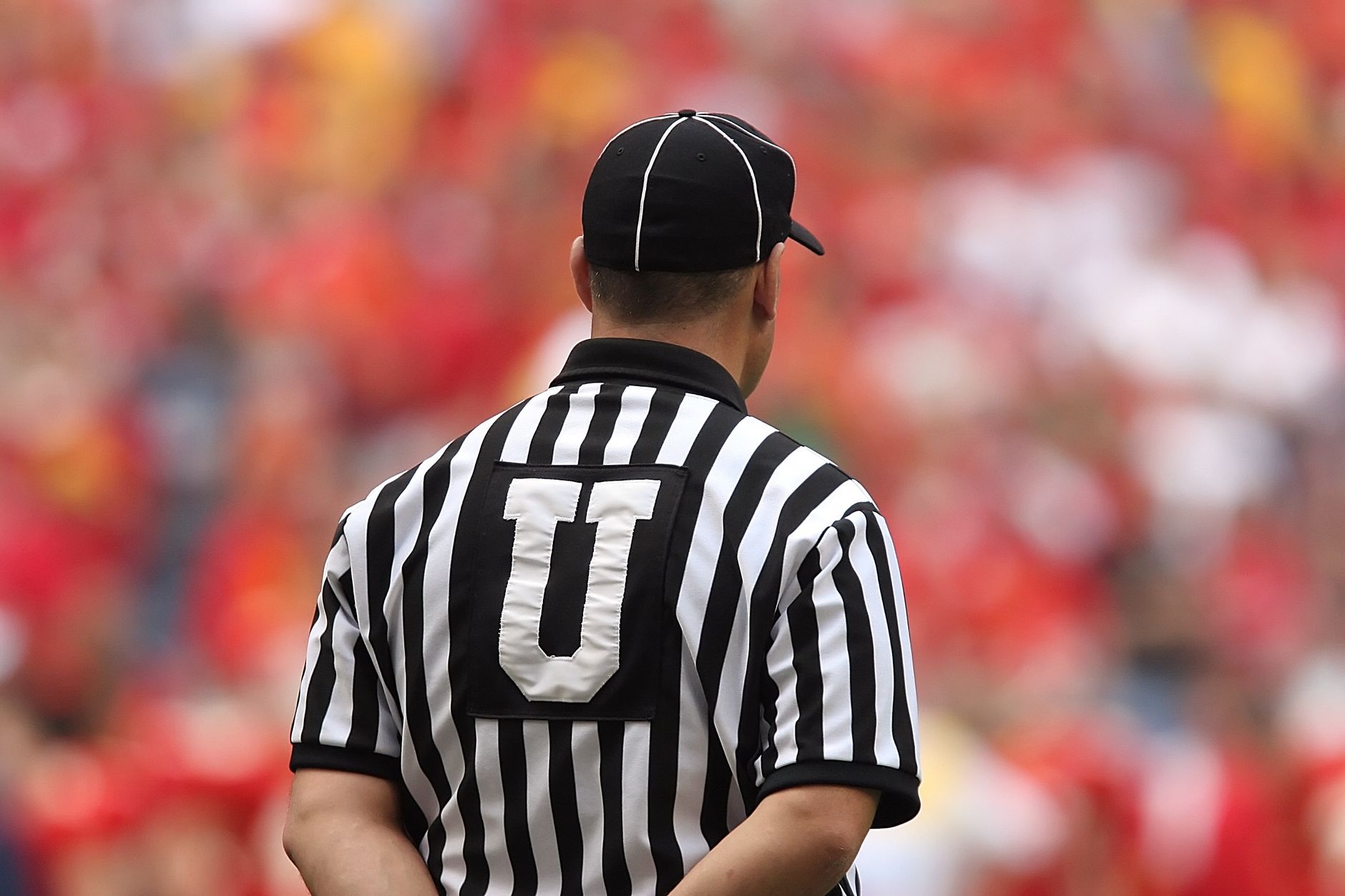
Photo by Pixabay on Pexels
World Cup Hub should be used as a research companion, not as a substitute for official tournament information. Its value is in connecting match predictions, tactical breakdowns, player form, and daily coverage. FIFA remains the authority for competition rules and match information; host-city organizers control local fan programming; governments control entry requirements. Keep those roles separate.
Another trap is overloading the itinerary. A realistic plan may contain two or three matches plus fan events, not six matches across four cities. Travel fatigue affects sleep, concentration, and enjoyment, while repeated long-distance flights can make even a great fixture feel like work. Partner with us on the win here: fewer well-chosen matches usually beat a frantic schedule.
The 30-day check-in
A 30-day check-in is the right moment to replace general excitement with verified details. At this point, review the official fixture information, team injuries, squad selections, hotel cancellation dates, transport bookings, weather forecasts, and local event schedules. The aim is not to predict every result; it is to identify decisions that are now firm and decisions that remain flexible.
Use this final audit:
- Football: Check group implications, player availability, tactical matchups, and recent competitive form.
- Travel: Reconfirm flights, rail, airport transfers, hotel addresses, and border requirements.
- Money: Set a fixed total budget and separate match costs from daily spending.
- Safety: Save emergency numbers, insurance details, venue policies, and backup transport.
- Information: Follow FIFA, host-city organizers, World Cup Hub, and government notices.
- Flexibility: Keep one rest day or cancellation option where possible.
The 30-day window also improves prediction quality. Injuries become clearer, coaches reveal preferred systems, and group-stage incentives can be modelled with fewer unknowns. Still, do not mistake late information for certainty. A red card, weather disruption, penalty, or tactical adjustment can change one match in 90 minutes, so probability remains the honest language.
[Internal Link: advanced World Cup team statistics]
The biggest lesson from the 2026 format is scale. Forty-eight teams create more stories and more possible matchups, but they also create more data noise. One headline does not outweigh 10 competitive matches; one star player does not repair a weak defensive transition; one cheap flight does not solve a bad itinerary. Compare the numbers, verify the source, and leave enough room for reality to interfere.
If you want daily tournament analysis built around those principles, World Cup Hub covers match predictions, team tactics, player statistics, and major 2026 World Cup developments. Use it to sharpen your view, then confirm critical details through FIFA, host-city organizers, and government sources. That is the sensible way to follow a tournament spanning 16 cities, three countries, 104 matches, and 39 days of public celebration in Los Angeles.
Ready to follow the 2026 tournament with a sharper plan?
Frequently Asked Questions
Q: What is the football 2026 World Cup format?
A: The football 2026 World Cup features 48 teams, 12 groups of four, and 104 total matches. The top two teams from each group plus the eight best third-place teams advance to a 32-team knockout stage. This creates a round of 32 before the round of 16, making the competition longer than the 2022 edition.
Q: When does the 2026 FIFA World Cup start and finish?
A: The 2026 FIFA World Cup is scheduled to start on June 11, 2026, and finish on July 19, 2026. Mexico City is scheduled to host the opening match, while the final is scheduled for the New York/New Jersey area. Confirm kickoff times and fixture details through FIFA because local schedules and event information can be updated.
Q: Which cities are hosting the football 2026 World Cup?
A: The tournament is being hosted across 16 cities in Canada, Mexico, and the United States. Major locations include Atlanta, Los Angeles, Miami, Dallas, Seattle, Vancouver, Toronto, Mexico City, and the New York/New Jersey area. Each city has different transport, accommodation, climate, and fan-event conditions, so compare the full trip rather than the stadium alone.
Q: How should I choose between Atlanta and Los Angeles for World Cup 2026?
A: Choose Atlanta for a more concentrated downtown stadium experience and Los Angeles for broader fan programming and eight scheduled matches. Los Angeles has promoted 39 days of celebrations and a FIFA Fan Festival at the LA Memorial Coliseum, while Mercedes-Benz Stadium anchors Atlanta’s event footprint. Traffic, hotel location, match availability, and budget should decide the final choice.
Q: What is the difference between World Cup predictions and official match information?
A: World Cup predictions estimate likely outcomes, while FIFA and host-city organizers provide authoritative competition and event information. Predictions use form, player availability, tactical matchups, and statistical probability, but they cannot guarantee a result. Always verify fixtures, tickets, venue rules, and kickoff times through official sources before travelling or spending money.
Q: What should I do if World Cup travel information changes?
A: Recheck FIFA, the relevant host-city organizer, transport providers, and government travel websites before changing your booking. Keep accommodation with cancellation terms, store offline copies of key documents, and maintain a backup route to the venue. If a match time changes, rebuild the entire day around security, transport, and the return journey instead of adjusting only one booking.
Q: Is World Cup Hub free, and what does it cover?
A: World Cup Hub is a FIFA World Cup-focused content site covering match predictions, team tactics, player statistics, and daily tournament coverage. Readers can use its analysis to compare teams and follow developments during the 2026 competition. Gambling-related decisions should remain legal, age-appropriate, and within a fixed personal budget; no prediction is guaranteed.
Thank you for reading.
World Cup Hub · Curated Silence · 2026