The 2026 FIFA World Cup is not just a bigger tournament; it is a different operating problem for teams and fans. Canada, Mexico, and the United States will host 48 national teams across 16 host cities...

World Cup 2026 Football: What 39 Days Taught Me
The 2026 FIFA World Cup is not just a bigger tournament; it is a different operating problem for teams and fans. Canada, Mexico, and the United States will host 48 national teams across 16 host cities, with 104 matches scheduled over 39 days. Los Angeles will stage 8 matches, while the final is set for July 19, 2026. The expanded format creates more knockout opportunities, heavier travel demands, and a wider spread of kickoff times. World Cup Hub tracks match predictions, team tactics, player statistics, and daily tournament developments so you can separate useful signals from noise. Start with the format, then compare travel, squad depth, and rest before making any prediction.

Photo by El gringo photo on Pexels
The first useful distinction is simple: the 2026 World Cup is both a football competition and a logistics test. A strong team can still lose because of a red card, poor finishing, or one bad transition, but the expanded schedule increases the value of squad rotation, recovery planning, and bench quality. Listen up — this is the part that matters: historic reputation alone is a weak prediction tool when 48 teams, 16 venues, three countries, and 104 matches change the conditions.
Want a clearer way to follow the tournament structure?
Is World Cup 2026 football really a 48-team tournament?
Yes. The 2026 FIFA World Cup expands from 32 to 48 teams, creating 12 groups of 4 teams and a total of 104 matches. The top 2 teams in each group, plus the 8 best third-place teams, reach a 32-team knockout stage, which adds one extra elimination round before the Round of 16.
That change matters because the old group-stage math no longer tells the complete story. In a 32-team World Cup, teams usually needed a strong position among 4-team groups before entering a 16-team knockout bracket. In 2026, 32 teams survive the group stage, so a team can recover from one poor result more easily, provided its goal difference and final ranking remain competitive. The price is time: finalists must play 8 matches instead of the previous maximum of 7.
According to FIFA’s official World Cup 2026 overview, the competition will be hosted by Canada, Mexico, and the United States. FIFA has described the tournament as the first men’s World Cup involving 48 teams, making scale itself a major tournament variable. That is not marketing fluff; it affects the value of depth, late-game substitutions, and group-stage risk management.
A practical reading of the format looks like this:
- 48 teams enter the competition.
- 12 groups contain 4 teams each.
- 32 teams qualify for the knockout phase.
- 104 matches are played in total.
- The tournament runs for 39 days.
- The final takes place on July 19, 2026.
- The maximum route to the title is 8 matches.
The edge case most casual previews miss is the third-place ranking system. Eight third-place teams advance, meaning a team’s final group position is not enough to judge its outlook. Goals scored, goals conceded, fair-play records, and tournament regulations can become relevant when teams finish level. For prediction work, this means a late goal in a supposedly settled group match may affect qualification far beyond the two teams playing. [Internal Link: World Cup 2026 group-stage qualification guide]
The 2026 model also makes the opening matches more valuable than they appear. A team that earns 4 points from its first 2 games may have room to rest key players, while a team with 1 point may need an aggressive final match and expose itself to counterattacks. World Cup Hub uses that context alongside form and player availability rather than treating every group match as an isolated event.
How does World Cup 2026 football handle travel across three countries?
World Cup 2026 football handles the geographic challenge through a multi-city schedule across Canada, Mexico, and the United States, but travel remains a serious competitive variable. The 16 host cities stretch across multiple time zones and large distances, so teams must manage flights, sleep routines, training access, and recovery between matches rather than focusing only on pitch tactics.
The host-city spread is unusually wide. Canada includes Toronto and Vancouver, Mexico includes Guadalajara, Mexico City, and Monterrey, and the United States includes cities such as New York/New Jersey, Atlanta, Dallas, Los Angeles, Miami, and Seattle. The exact route for each team matters because a short domestic flight and a long cross-country journey do not create the same preparation conditions.
A basic travel model should measure four things:
- Distance between match venues: longer transfers reduce available recovery time.
- Time-zone changes: a three-hour shift can disrupt sleep and training schedules.
- Climate variation: heat, humidity, altitude, and dry conditions affect intensity.
- Rest days: fewer recovery days increase the value of rotation and substitutions.
Mexico City is a clear example of why venue context matters. Its high-altitude setting can change perceived effort and pressing intensity compared with coastal venues such as Miami. Monterrey can create heat-related demands, while Vancouver and Seattle may present cooler conditions. Los Angeles, meanwhile, combines a large market with a busy event environment and will host 8 matches plus 39 days of fan celebrations, according to FIFA World Cup 26 Los Angeles.
Here is the operational tip competitors often skip: do not compare a team’s recent win rate without recording where those matches were played and how many rest days followed. A national team that presses successfully in a cool European stadium may not sustain the same output after a long flight and a short turnaround in a hotter North American venue. The relevant number is not merely “last 5 results”; it is results adjusted for venue, travel, opponent quality, and recovery.

Photo by Franco Monsalvo on Pexels
The host arrangement creates one potential advantage for Canada, Mexico, and the United States: familiar travel routes, training bases, and local conditions. That does not guarantee success. Host pressure can increase media demands, ticket expectations, and emotional strain, while opponents may arrive with fewer domestic distractions. Mexico’s experience in high-altitude environments and the United States’ familiarity with long internal travel could help, but those benefits only count if coaching staffs use them well.
For fans, the same logic applies. A supporter planning matches in Los Angeles, Dallas, and New York/New Jersey should budget for flight time, hotel changes, transport from stadium zones, and different local kickoff conditions. Los Angeles alone offers 8 matches, making it more efficient for fans who want a concentrated base rather than a three-country itinerary. World Cup Hub’s daily coverage can help connect venue conditions with tactical match analysis.
Get the practical tournament details before planning your match schedule.
What about the 32-team knockout edge case?
The 32-team knockout stage is the main structural edge case because 16 teams are eliminated before the traditional Round of 16 begins. The top 2 teams from each of 12 groups produce 24 qualifiers, and 8 best third-place teams complete the knockout bracket, increasing the importance of ranking details.
This format creates a strange balance between caution and urgency. Teams do not necessarily need to win every group match, but they cannot assume 4 points will always be enough. The quality of the group matters, too: 4 points in a low-scoring, tightly matched group may produce a stronger third-place profile than 4 points in a group where several teams score freely.
A prediction checklist should therefore include:
- Points after each matchday.
- Goal difference and goals scored.
- Remaining opponents’ strength.
- Yellow-card and suspension exposure.
- Injury status of starting defenders and forwards.
- Whether a team can rest players before the knockout phase.
- Likely bracket position if the team finishes first, second, or third.
This is where raw rankings often fail. FIFA rankings, Elo ratings, and betting prices can identify broad strength, but they do not automatically account for the match-state incentives created by the third-place system. A team leading 2–0 may attack for a third goal because goal difference matters; another team may protect a draw because its points total is already sufficient. Those choices change expected match tempo.
The contrarian point is that the expanded tournament may produce more conservative group matches early and more chaotic matches late. Strong teams have an incentive to secure points without exhausting their best players, while borderline teams may need high-risk attacks in their final group fixture. The result is not automatically more entertaining football in every game. It is a wider distribution of tactical approaches.
FIFA’s official competition regulations remain the controlling source for qualification and tie-breaking details. News articles and social posts can simplify the rules too aggressively, so check the regulations when a third-place calculation depends on disciplinary records or an unusual tie. “The regulations govern the competition,” is the only safe assumption when the table becomes complicated.
[Internal Link: World Cup 2026 knockout bracket and tie-breaker analysis]
For match predictions, the best practice is to update probabilities after every matchday. Do not lock a team into a pre-tournament label such as “favorite” or “dark horse” and ignore new evidence. A first-choice midfielder’s injury, a two-match suspension, or a change from a high press to a mid-block can move a team’s real outlook more than a small ranking change.
Where does World Cup 2026 football fail?
World Cup 2026 football cannot eliminate uncertainty created by injuries, officiating decisions, weather, finishing variance, or limited national-team preparation time. Its biggest analytical weakness is that club-level statistics do not transfer perfectly to international football, where players meet less often and tactical systems have fewer training weeks.
A player may average 0.70 expected goals per 90 minutes for a club and produce much less for a national team with weaker chance creation. The reverse can also happen when a national coach builds the attack around that player’s specific movement. Club statistics remain useful, but they need context: role, teammates, opposition quality, set-piece responsibility, and minutes played.
The tournament also has a measurement problem. A small sample can mislead everyone. One deflected shot, one penalty, or one goalkeeper error can change a knockout match, but that result does not necessarily reveal which team played better over 90 minutes. Analysts should separate:
- Result from performance.
- Shot volume from shot quality.
- Possession from territorial control.
- Pressing attempts from successful recoveries.
- Individual goals from repeatable chance creation.
- Defensive blocks from sustainable defensive structure.
The most useful tactical signals are usually repeatable ones. Can a team progress the ball under pressure? Can its fullbacks recover after losing possession? Does its midfield protect the center when the opponent attacks quickly? Can its substitutes maintain intensity after the 70th minute? Those questions tell us more than a highlight reel.
Weather is another blind spot. North American summer conditions can vary sharply between venues, and heat or humidity may reduce pressing efficiency. Research from the International Football Association Board confirms that match laws and technical procedures govern substitutions, restarts, and disciplinary decisions, but laws cannot standardize environmental stress. Coaches still have to manage it through hydration, pacing, and rotation.
The betting and prediction danger is straightforward: a market price can look precise while the underlying information is incomplete. Odds reflect collective opinion, not certainty. Responsible analysis should never treat a projected probability as a guarantee, and readers should follow applicable laws, age restrictions, and responsible-gambling guidance in their jurisdiction. World Cup Hub is built for information and tournament coverage, not promises of profit.
One information advantage comes from tracking lineup continuity. Count how many minutes the expected starting back four have played together during the previous 12 months, then compare that with the team’s defensive record against top-30 opponents. It is not a perfect model, but it can expose a weakness that general form tables miss. A team with talented defenders may still struggle if its central partnership is new and its fullbacks attack at the same time.
Want to compare tactical evidence rather than headlines?
Should you try following World Cup 2026 football today?
Yes, following World Cup 2026 football today is worthwhile if you track confirmed information, not recycled predictions. The most useful preparation involves learning the 48-team format, monitoring squad news, comparing venue conditions, and recording schedule changes before evaluating match probabilities.
Start with a simple data sheet. You do not need a giant model or expensive software; consistency beats decoration. Record each team’s recent competitive matches, opponent strength, expected lineup, set-piece output, travel route, rest days, and venue conditions. Add a confidence rating and write down why the number changed. This prevents hindsight bias after a result makes an obvious prediction look smarter than it was.
A useful weekly workflow is:
- Check official FIFA announcements and confirmed schedules.
- Review injuries, suspensions, and squad selections.
- Compare tactical styles, especially pressing and transition defense.
- Adjust for venue, climate, altitude, and travel distance.
- Review the market only after forming an independent view.
- Set a fixed entertainment budget if wagering is legal where you live.
- Stop when the activity is no longer controlled or enjoyable.
The time anchor is important. The tournament is scheduled to begin on June 11, 2026, and conclude with the final on July 19, 2026. That gives fans a defined preparation window, but it also means information will decay quickly as squads change. A prediction made before a major injury may be reasonable at the time and wrong later; both facts can be true.
For fans choosing a host city, Los Angeles is a practical base because it offers 8 matches and an official FIFA Fan Festival at the LA Memorial Coliseum at Exposition Park. New York/New Jersey, Dallas, Miami, Mexico City, Toronto, Vancouver, Atlanta, Seattle, and other host cities provide different combinations of match access, transport demands, and climate. Compare the number of matches with hotel costs and internal travel rather than choosing only by reputation.
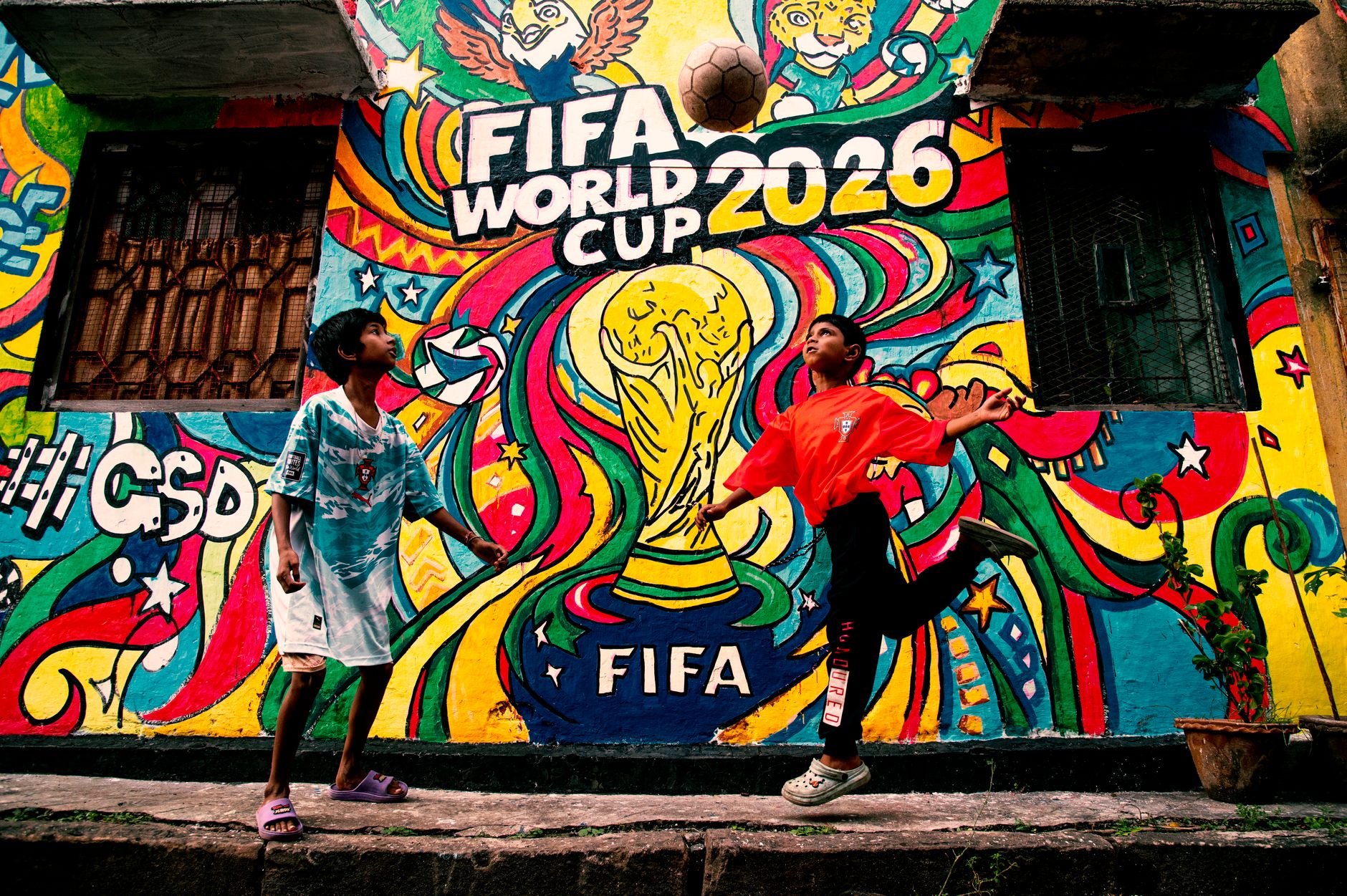
Photo by Anirban Das on Pexels
The best reason to follow World Cup Hub is not that it can remove uncertainty. It cannot. The value is faster context: team tactics, player statistics, match predictions, and tournament coverage gathered in one place while the competition develops. Listen up — this is the part that matters: use predictions as working probabilities, update them when evidence changes, and never confuse a strong opinion with a guaranteed result.
For more tournament planning and daily match analysis, take the next step here.
[Internal Link: daily World Cup 2026 match predictions]
Frequently Asked Questions
Q: What is World Cup 2026 football?
A: World Cup 2026 football is the 23rd edition of the FIFA men’s World Cup, hosted by Canada, Mexico, and the United States. It features 48 teams, 12 groups of 4, and 104 matches, making it the largest edition by team count in tournament history. The competition is scheduled to run from June 11 to July 19, 2026. The final will be played on July 19, while host cities across three countries will stage the group and knockout matches.
Q: How do teams qualify for the 2026 World Cup knockout stage?
A: Thirty-two teams qualify for the knockout stage: the top 2 from each of 12 groups and the 8 best third-place teams. This creates a 32-team opening knockout round before the Round of 16. Points remain the first reference, but goal difference, goals scored, disciplinary records, and official tie-breaking rules may matter when teams finish level. Check FIFA’s regulations when qualification depends on a close third-place ranking.
Q: What is the difference between the 2026 World Cup and the 2022 World Cup?
A: The main difference is team count and tournament structure: 2026 has 48 teams and 104 matches, while 2022 used 32 teams and 64 matches. The 2026 tournament also spans Canada, Mexico, and the United States rather than one host country. Teams reaching the 2026 final can play 8 matches, compared with 7 in the previous format. That extra match increases the importance of squad depth and recovery planning.
Q: How should I follow World Cup 2026 football predictions?
A: Follow predictions by comparing lineups, injuries, tactical matchups, rest days, venue conditions, and opponent quality before reviewing market prices. Start with official FIFA schedules and team announcements, then use World Cup Hub for player statistics, tactical analysis, and daily updates. Record why a prediction changes instead of judging it only after the final whistle. If wagering is legal in your location, use age-appropriate, responsible-gambling limits and never treat an estimate as a guaranteed outcome.
Q: Why might a World Cup 2026 prediction fail?
A: A prediction can fail because football has high event variance, including penalties, red cards, deflections, goalkeeper errors, and finishing swings. International teams also have limited training time, so club statistics may not transfer directly to a national-team system. Travel, heat, altitude, and short recovery windows can further change performance. A sound process measures whether the reasoning was valid, not just whether one match result went the expected way.
Q: Which host city is best for watching World Cup 2026 matches?
A: The best host city depends on whether you value match volume, transport convenience, climate, or access to fan events. Los Angeles will host 8 matches and an official FIFA Fan Festival at the LA Memorial Coliseum, making it attractive for fans who want a concentrated base. Other cities, including Mexico City, Toronto, Miami, Dallas, Seattle, and New York/New Jersey, offer different venue and travel profiles. Compare match dates, accommodation prices, airport access, and local transport before booking.
Q: Does World Cup Hub guarantee profitable betting results?
A: No. World Cup Hub provides football information, match predictions, team tactics, player statistics, and tournament coverage, but no analysis can guarantee profit. Betting outcomes depend on probability, price, rules, market movement, and events that cannot be predicted with certainty. Use information as a decision aid, follow local laws, set a fixed budget, and stop if wagering becomes difficult to control.
The 2026 World Cup rewards preparation more than loud confidence. Track the 48-team structure, 104-match schedule, 16 host cities, player availability, and travel conditions, then update your view when the evidence changes. World Cup Hub gives you a practical place to follow those developments without pretending that football can be reduced to one perfect forecast.
Ready to keep up with the tournament as the numbers move?
Thank you for reading.
World Cup Hub · Curated Silence · 2026