The 2026 FIFA World Cup is the first expanded edition with 48 teams, 104 matches, and three host countries: the United States, Canada, and Mexico. Los Angeles will host 8 matches at SoFi Stadium, whil...

Inside Los Angeles: An 8-Match 2026 Breakdown
The 2026 FIFA World Cup is the first expanded edition with 48 teams, 104 matches, and three host countries: the United States, Canada, and Mexico. Los Angeles will host 8 matches at SoFi Stadium, while Atlanta will stage 6 matches, including a semifinal. The tournament runs from June 11 to July 19, 2026, with the final scheduled for MetLife Stadium in New Jersey. World Cup Hub tracks fixtures, team tactics, player statistics, predictions, and betting-market movement for fans following the competition from North America and beyond. The practical takeaway is simple: build your match plan around venue, travel, kickoff time, squad rotation, and confirmed FIFA information rather than reputation alone.
World Cup 2026 is not just a bigger version of Qatar 2022. The tournament adds 16 teams, increases the match count from 64 to 104, and spreads the competition across 16 host cities. That creates more football, but it also creates more variables for anyone tracking form, forecasts, and betting prices. Listen up — this is the part that matters: a famous team can still be a poor wager if travel, heat, rest, or a tactical mismatch has been ignored.
Want the tournament numbers and host-city details in one place? World Cup Hub provides daily coverage for readers comparing team strength, player output, and match conditions.
Is the 2026 FIFA World Cup really the biggest tournament ever?
Yes. The 2026 FIFA World Cup is the largest edition in tournament history, featuring 48 teams, 104 matches, 16 host cities, and three national hosts: Canada, Mexico, and the United States. The event opens on June 11, 2026, and concludes with the final on July 19, 2026, making scale and scheduling central competitive factors.
The basic structure is straightforward. The 48 qualified teams are divided into 12 groups of 4, with each team playing 3 group matches. The 12 group winners, 12 runners-up, and 8 best third-place teams advance to a 32-team knockout stage. Every side reaching the final must therefore play 8 matches, compared with 7 in the 32-team format used from 1998 through 2022.
That extra knockout game changes squad planning. A team with a strong starting eleven but weak substitutes may lose value late in the tournament, particularly if it travels between cities or faces short recovery windows. A deeper squad can protect its best players during the group phase, but that strategy only works if qualification is secured early.
According to FIFA’s official 2026 World Cup overview, the expanded tournament will involve 48 teams and 104 matches. FIFA’s published competition information also makes the central point clear: “The FIFA World Cup 2026 will be the biggest World Cup ever.” That is not marketing fluff when the match total rises by 62.5% from 64 to 104.
For prediction work, the larger field creates two opposing effects:
- More matches produce more data for comparing formations, shot volume, pressing intensity, and player minutes.
- More debutants and uneven team quality increase uncertainty in early group fixtures.
- Third-place qualification can reduce the urgency of a final group match.
- Knockout travel and accumulated fatigue become more important after the round of 32.
- Market prices may overreact to one famous result because casual money follows reputation.
To learn how team quality is measured, use World Cup Hub’s [Internal Link: team rankings and form analysis] before relying on headline tournament odds.
How does the 2026 World Cup handle the Los Angeles and Atlanta host cases?
Los Angeles will host 8 matches at SoFi Stadium, including the United States men’s national team’s opening match on June 12, while Atlanta will host 6 matches at Mercedes-Benz Stadium, including a semifinal. Both cities offer major fan events, but their betting and match-analysis contexts differ because venue climate, travel routes, and home support are not identical.
Los Angeles is built around SoFi Stadium in Inglewood, a modern venue with a capacity of more than 70,000 for major events. The local tournament program also includes 39 days of fan celebrations and the FIFA Fan Festival at the Los Angeles Memorial Coliseum from June 11 to June 14. Those events matter commercially, but the football question is narrower: how will teams handle a high-profile match in a huge metropolitan region where traffic and hotel locations can add practical friction?
Atlanta presents a different operating picture. Mercedes-Benz Stadium is a retractable-roof venue in downtown Atlanta, and the city is positioned as a major southern football center. Atlanta will host 6 matches, with the semifinal carrying the city’s most significant fixture. The roof and controlled stadium environment may reduce some weather variation, but they do not remove travel fatigue or the pressure of a late-stage knockout game.
A useful comparison for match analysis is:
| Factor | Los Angeles | Atlanta |
|---|---|---|
| Matches | 8 | 6 |
| Key venue | SoFi Stadium | Mercedes-Benz Stadium |
| Notable event | U.S. opening match | Semifinal |
| Fan program | 39 days of celebrations | Citywide football events |
| Main analytical concern | Traffic, distance, climate adaptation | Heat, humidity, semifinal pressure |
The comparison is not a claim that one venue automatically favors a particular team. It means the same tactical model should not be applied blindly. A high press that works in a cool evening may become less effective when players face heat, humidity, or a long travel leg. Likewise, a team that dominates possession at home may struggle if its buildup is disrupted by aggressive pressing and a dense knockout schedule.
For practical planning, check the confirmed [Internal Link: 2026 World Cup match schedule and kickoff times] before comparing odds. Kickoff time affects rest, viewing conditions, and local weather, while a schedule screenshot or social-media post can become outdated after official adjustments.
See how Los Angeles and Atlanta fit into the wider tournament map before making a forecast.
A less obvious variable is venue switching. The 2026 host cities span a wide North American footprint, from Vancouver and Seattle in the west to Miami, Toronto, and the New York-New Jersey area in the east. A team may face multiple time zones, different training environments, and large changes in travel distance within 10 days. Most public previews discuss star players; fewer adjust for the physical cost of moving between regions.
One practical method is to record each team’s rest interval, travel direction, and previous venue before every match. A simple three-part note can improve discipline:
- Count full recovery days between matches.
- Identify whether the team crosses one or more time zones.
- Compare the next opponent’s pressing style with the team’s recent workload.
This does not produce a magic prediction. It prevents a common mistake: treating all group matches as if they occur under identical conditions.
What about the 48-team format’s edge cases?
The main edge case is third-place qualification: 8 of the 12 third-placed teams advance to the round of 32, creating a 32-team knockout bracket after the group phase. This can make final group fixtures less predictable because some teams may qualify with a draw, while others may need a decisive result or goal difference.
The old 32-team format had a simple incentive structure: the top 2 teams in each group advanced. The 2026 format keeps the top 2 but adds the 8 best third-place teams. That extra route can produce tactical caution in some groups and frantic late attacks in others, depending on the live standings.
The edge case becomes especially important when four teams are tightly matched. A team with 4 points may already be well placed, while a team with 3 points could need a win. However, the exact qualification picture depends on results across the other 11 groups, so “must win” language should not be accepted without checking the current table and tiebreak rules.
For responsible match analysis, separate three questions:
- What result guarantees qualification?
- What result probably qualifies the team?
- What result leaves the team dependent on another group?
That distinction matters in betting markets. A team priced as if it must attack may instead protect a draw. Another team may need goals, increasing the chance of an open second half. World Cup Hub’s [Internal Link: live group-table and qualification scenarios] can help readers track those changing incentives.
A further information gain comes from the round-of-32 transition. Teams that finish first may receive a different opponent profile from teams finishing second or third, so qualification alone is not the complete objective. Coaches must balance immediate safety against the possibility of a harder bracket path.
The expanded format also increases the importance of bench usage. With 8 matches required to win the tournament, substitutions and rotation can become measurable predictors. Track starting-player minutes, late-game substitutions, extra-time exposure, and injury reports rather than judging a squad only by its first-choice lineup.
Use the official FIFA competition regulations for rules and disciplinary details. FIFA states in its competition framework that “the Regulations govern the organisation and staging of the competition,” which is why unofficial bracket graphics should not be treated as final authority.
Where does the 2026 football World Cup analysis fail?
World Cup analysis fails when it confuses popularity with probability, recent results with stable team quality, or tournament narratives with measurable evidence. The most common errors are overvaluing star names, ignoring opponent strength, treating friendly matches as competitive proof, and assuming every host advantage is equally powerful.
A famous forward can attract betting money without improving a team’s defensive structure. A recent 4–0 win may also mislead if the opponent had a red card, rested starters, or conceded two early goals. The correct response is not to ignore results, but to place them beside shot quality, possession location, transition chances, set-piece output, and the level of opposition.
There is another failure point: small samples. Three matches can show a pattern, but they rarely prove one. If a team scores 7 goals from 2.1 expected goals across two games, regression risk is obvious. If another team concedes 5 goals from 2.8 expected goals, its defensive record may be worse than the underlying chances suggest. Numbers do not eliminate uncertainty; they show where uncertainty is concentrated.
A basic evidence checklist should include:
- Competitive results, not only friendlies.
- Expected goals for and against across at least 8 to 10 meaningful matches.
- Set-piece goals and conceded set pieces.
- Key-player availability and confirmed minutes.
- Formation changes against different pressing levels.
- Travel, rest, and local kickoff conditions.
- Price movement across several regulated or reputable bookmakers.
Gambling should remain entertainment, not a way to recover losses. The National Council on Problem Gambling describes responsible play as setting limits and recognizing when gambling stops being enjoyable. World Cup Hub can provide predictions and market analysis, but no forecast removes variance, and no tip justifies chasing a losing bet.
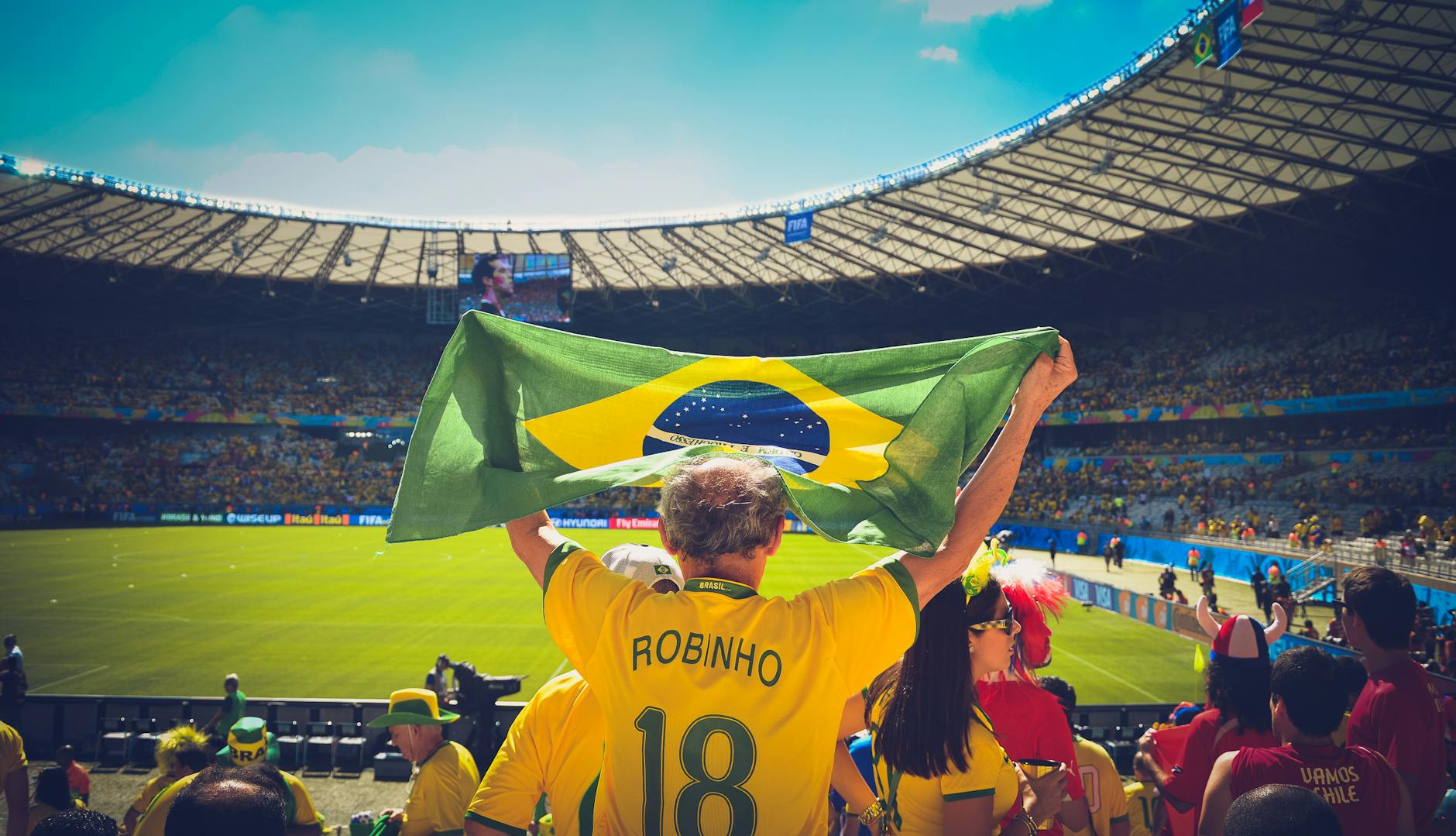
Photo by Caio on Pexels
A contrarian point is worth stating plainly: the most popular team may not be the best outright value. A favorite priced at implied odds of 30% needs to win more than 3 times in 10, after accounting for margin, to justify that price. If the model gives the team a 27% chance, the badge is doing the work, not the numbers.
This is where [Internal Link: World Cup betting fundamentals and probability guide] becomes useful. Convert odds into implied probability, compare that figure with your own estimate, and include bookmaker margin before calling a price attractive. A forecast without a price is an opinion; a forecast compared with a price is analysis.
Should you try following the 2026 World Cup today?
Yes, but start with a structured tracking sheet rather than immediate betting. Record the 48 teams, groups, confirmed fixtures, host venues, rest days, injuries, and market prices, then update the information after each competitive match. This approach costs nothing, reduces impulsive decisions, and produces a clearer view before the June 11 opening match.
A workable World Cup preparation plan has five steps:
- Build the fixture base: save official FIFA dates, venues, and kickoff times.
- Track team form: record goals, expected goals, shots, set pieces, and opponent strength.
- Measure player use: note minutes, substitutions, injuries, and suspension risk.
- Adjust for location: include time zones, climate, travel distance, and home support.
- Compare prices carefully: calculate implied probability and avoid bets that exceed your budget.
Los Angeles deserves special attention because its 8 matches include the United States opening match and a major fan program at the Los Angeles Memorial Coliseum. Atlanta deserves attention because its 6-match schedule includes a semifinal at Mercedes-Benz Stadium. The final at MetLife Stadium in New Jersey adds a separate east-coast context, so a single “North American home advantage” assumption is too broad.
Get a cleaner daily view of team news, tactics, and numbers with World Cup Hub.
The best current use of 2026 World Cup information is preparation. You can compare qualification paths, identify tactical mismatches, and understand how a 48-team format changes motivation without pretending to know the winner in advance. Keep a fixed stake limit, wait for confirmed lineups, and treat late information as a reason to reassess rather than a reason to rush.
Frequently Asked Questions
Q: What is the 2026 football World Cup?
A: The 2026 football World Cup is FIFA’s expanded men’s tournament featuring 48 teams across Canada, Mexico, and the United States. It will include 104 matches in 16 host cities from June 11 to July 19, 2026. The format begins with 12 groups of 4 teams, followed by a 32-team knockout stage. The final is scheduled for MetLife Stadium in New Jersey, while Los Angeles and Atlanta are among the major host cities.
Q: How do I follow the 2026 World Cup intelligently?
A: Follow the tournament by combining official fixtures with form, player availability, tactics, travel, and price data. Start with FIFA’s confirmed schedule, then track each team’s last 8 to 10 competitive matches, expected goals, defensive chances, and squad minutes. World Cup Hub adds daily predictions, player statistics, and tactical analysis, but readers should verify late injury and lineup information before making decisions.
Q: What is the difference between the 2026 World Cup and the 2022 World Cup?
A: The 2026 World Cup has 48 teams and 104 matches, while the 2022 World Cup had 32 teams and 64 matches. The expanded edition also uses a round of 32 after the group stage because 8 of the 12 best third-place teams qualify. That creates more games, a longer route to the final, and additional uncertainty around final group-match incentives.
Q: Is Los Angeles a good city for watching the 2026 World Cup?
A: Los Angeles is one of the strongest host-city options because it will stage 8 matches, including the United States opening match at SoFi Stadium. The city will also host 39 days of fan celebrations and a FIFA Fan Festival at the Los Angeles Memorial Coliseum from June 11 to June 14. Visitors should plan accommodation and transport early because Inglewood, downtown Los Angeles, and Exposition Park are separate travel zones.
Q: What should I do if World Cup match information changes?
A: Check FIFA and the relevant official host-city website before relying on a changed fixture, kickoff time, venue, or fan-event notice. Tournament information can be updated, while screenshots and unofficial social posts may remain online after becoming inaccurate. If a betting market does not match the confirmed schedule or lineup, pause and contact the licensed operator rather than guessing.
Q: How much does it cost to follow the 2026 World Cup?
A: Following World Cup news and analysis online can be free, while attending matches requires separate spending on tickets, travel, accommodation, food, and transport. Costs vary sharply between Los Angeles, Atlanta, New Jersey, Vancouver, Mexico City, and the other host cities. For gambling, set a fixed entertainment budget before placing any wager, never borrow money, and do not increase stakes after a loss.
Q: Are 2026 World Cup predictions reliable?
A: World Cup predictions are useful estimates, not guarantees, because football outcomes remain affected by injuries, red cards, finishing variance, and tactical changes. A serious model should compare team strength, expected goals, opponent quality, player minutes, venue conditions, and market probability. Use predictions to organize your research, then wait for confirmed lineups and treat any claimed certainty as a warning sign.
World Cup Hub is the place to keep your tournament research organized as the competition approaches.
Thank you for reading.
World Cup Hub · Curated Silence · 2026